










論文:A study on the contribution of structural concrete to reduce carbon dioxide emissions of the demand side(Akio Kasuga)
2025-12-12 18:36:41
<Abstract>
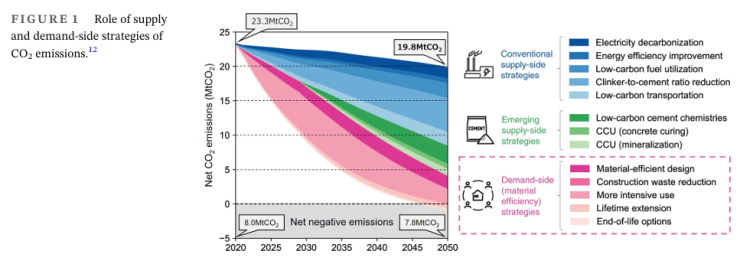
The CO2 , the main material used in structural concrete, is emitted in various processes in its supply chain. Therefore, reducing CO2 emissions is not just a matter for the supply side, namely cement and concrete manufacturers, but also concerns the demand side including designers, contractors, and the structure owners. However, how much supply and demand sides? In this article, the net zero roadmap for concrete by 2050 published by the GCCA ,a Global Cement and Concrete Association, and the National Institute for Environmental Studies in Japan, is analyzed to clarify the contribution of supply and demand sides to the reduction of CO2 emissions. Further more ,estimates have been made of the reduction in CO2 emissions for concrete, which is the main material used in structural concrete and for reinforcing steel, although data is insufficient. And a proposal is made for the indicators that each member of fib should aim for. This will make it possible to visualize the CO2 emissions reduction effects that each member organization can show to take holders and motivate the development and implementation of new technologies that contribute to low-carbon and decarbonization
<要旨(本サイトによる仮訳)>
構造用コンクリートに主に使用されるコンクリートが排出するCO2は、そのサプライチェーンにおける様々な工程で発生する。したがって、CO2排出量の削減は、供給側(セメント・コンクリートメーカー)のみならず、設計者、施工者、構造物所有者を含む需要側にも関わる課題である。しかし、CO2排出量の削減分を供給側と需要側の間でどのように分担すべきか? 本稿では、グローバルセメント・コンクリート協会(GCCA)と国立環境研究所が発表した「2050年までのコンクリートにおけるネットゼロロードマップ」を分析し、供給側と需要側のCO2排出量削減への貢献度を明らかにする。さらに、構造用コンクリートに主に使用されるコンクリートと、データが不十分ではあるが鉄筋のCO2排出量削減効果を推定した。そして、fibの各加盟組織が目指すべき指標を提案する。 これにより、各加盟組織がステークホルダーに示すことができるCO2排出量削減効果を可視化し、開発と実施を促進することが可能となる。
春日昭夫(かすが・あきお)
三井住友建設エグゼクティブ・フェロー、東京大学大学院工学系研究科社会基盤学専攻上席研究員。










 Research Institute for Environmental Finance